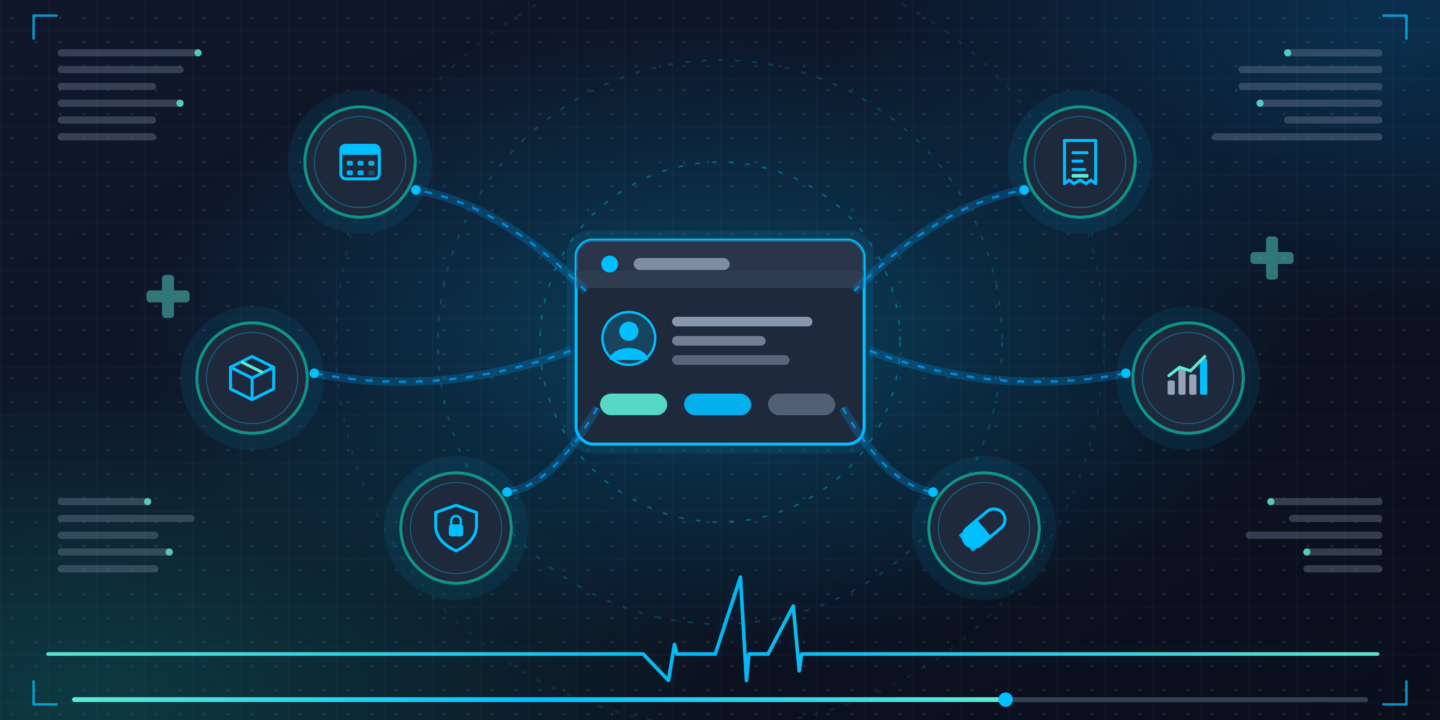
Enterprise-grade value optimization in healthcare means getting the full operational value out of a clinic’s systems while holding them to the standards a large organisation would expect: controlled access, a complete audit trail, tested backups and data protection built in rather than added later. The term is not an industry standard, so we use it precisely here. “Value” is the revenue a clinic earns and actually collects, the stock it buys and actually uses, and the staff time it spends on patients rather than on paperwork. “Enterprise-grade” is the level of reliability and control that patient data deserves, whatever the size of the clinic.
This article is written for private clinic owners, medical directors, administrators and healthcare investors in Morocco and the wider region. It explains where value leaks in a typical private clinic, what a custom clinic database should do about it, how patient data protection under Moroccan Law 09-08 shapes the design, and how such a system is put in place without disrupting care.
Key points
- Enterprise-grade value optimization means capturing every act, claim and stock item while holding the system to enterprise standards.
- Value leaks in clinics are mostly administrative: unbilled acts, rejected claims, expired stock.
- The clinic is the data controller under Law 09-08; the system supports its commitments.
- Hosting can stay in Morocco, on managed servers or in the clinic’s own premises.
Table of Contents
Where value leaks in a private clinic
Private clinics are complex businesses. They combine a reception desk, consultation rooms, sometimes an operating theatre, a pharmacy or consumables store, a billing office dealing with several payers, and a team of practitioners with different schedules and fee arrangements. In many clinics, each of these runs on its own tool: a diary, a spreadsheet, a paper register, an accounting package.
The leaks we find most often are operational, not clinical.
Appointments and patient flow
- Double bookings and gaps in practitioners’ diaries because appointments are taken by telephone, on WhatsApp and at the desk, in different places.
- No-shows that are never followed up, leaving rooms and practitioners idle.
- Waiting times that nobody measures, so nobody can improve them.
Billing and collection
- Acts performed but not billed, because the consultation note never reached the billing office.
- Claims to insurers and mutual funds rejected for missing information, then left unresolved.
- Patient balances that are not followed up after discharge.
- Practitioner fees calculated by hand at month-end, with disputes.
Stock and consumables
- Medicines and consumables that expire on the shelf because nobody saw the date in time.
- Stock-outs of critical items discovered during a procedure.
- Consumables used but not charged to the patient file.
Data and compliance
- Patient records spread across paper files, spreadsheets and personal phones.
- Shared logins at reception, so nobody knows who consulted which record.
- Backups that have never been restored.
Enterprise-grade value optimization addresses all four leaks at once, because they share one cause: the same patient, the same act and the same item are recorded in several places, by several people, at different times.
What enterprise-grade value optimization looks like in a clinic system
Enterprise-grade value optimization starts from the principle we apply in every sector: record each event once, at the moment it happens, by the person who sees it, and let everything else follow from that record.
One patient file, one identifier
Each patient has one record with a stable identifier, created at the first contact. Appointments, consultations, acts, prescriptions, consumables, invoices and payments attach to that record. Reception, practitioners and billing see the same patient, not three versions of them.
Appointments and flow in one diary
All appointments, whether taken by phone, at the desk or through an online request, go into one diary per practitioner and per room. Reminders reduce no-shows. Arrival, waiting and consultation times are recorded automatically, so the clinic can see where patients wait and why.
Acts that bill themselves
When a practitioner records an act, the corresponding billing line is created at the same moment, with the right tariff and the right payer: the patient, mandatory health insurance (AMO), a mutual fund or a private insurer. The billing office checks and sends; it no longer reconstructs. Claims that are rejected return to a work list with the reason, so they are corrected rather than forgotten. Our invoicing and stock module follows this principle.
Stock linked to the patient
Consumables and medicines are received into stock with their batch and expiry date. When an item is used for a patient, it leaves stock and appears on the patient’s file and, where applicable, on the invoice. Alerts warn before stock runs out and before items expire.
Practitioner fees calculated, not argued
Fee arrangements, such as percentages, fixed amounts or shared acts, are configured once. Each practitioner can see the acts recorded in their name and the resulting fees during the month, not only at the end. Disputes fall because the calculation is visible, and the month-end payment run becomes a check of figures everyone has already seen rather than a negotiation.
Dashboards for management
The clinic director sees activity per day and per practitioner, billing and collection, outstanding claims, stock value and expiries, and waiting times. Each figure can be opened to the records behind it.
Data protection: building to Moroccan Law 09-08
Health data is among the most sensitive personal data a business can hold. In Morocco, the processing of personal data is governed by Law 09-08 and supervised by the Commission Nationale de contrôle de la protection des Données à caractère Personnel (CNDP). Health data is treated as sensitive data under that law, and processing it is subject to prior formalities with the CNDP.
It is important to be clear about roles. The clinic is the data controller. It is the clinic that makes the filing with the CNDP, defines the purposes of processing and answers to patients. A software provider cannot make a clinic compliant on its behalf, and should not claim to. What the system can and must do is make the clinic’s commitments real in daily operation.
What the system does to support compliance
- Access by role and by need. Reception sees administrative data; practitioners see the clinical records of their patients; billing sees what billing requires. No shared logins.
- A complete access log. Every consultation and change of a patient record is recorded with the user, the date and the time. The clinic can answer the question “who saw this file?”
- Minimisation. The system collects only the fields the clinic has defined as necessary, and nothing is sent to third parties without a defined purpose.
- Retention rules. Records can be archived or anonymised according to the retention periods the clinic sets.
- Patients’ rights. Access and rectification requests can be answered from the system, with an export of the patient’s data.
- Security. Encrypted connections, encrypted backups, tested restores and updates applied on schedule.
- Hosting where the clinic decides. Managed cloud servers, or a server inside the clinic’s own premises in Morocco when the clinic prefers its data to stay on site. Transfers of personal data outside Morocco are regulated under Law 09-08, which is one reason many clinics prefer local hosting.
For clinics that treat patients from abroad, other regimes such as the European GDPR may become relevant in some situations. That is a question for the clinic’s legal adviser; the system’s access controls, logs and export functions support either regime.
Enterprise-grade value optimization in numbers
Worked example: a clinic performing 80 consultations and acts a day at an average of 400 MAD, which loses two per cent of acts between the consultation room and the billing office, leaves about 640 MAD unbilled per day, or more than 16,000 MAD in a working month. If a further share of insurer claims is rejected and never resubmitted, the gap widens. The figures are illustrative; the mechanism is common. Enterprise-grade value optimization closes it by creating the billing line at the moment the act is recorded.
The same logic applies to stock, and it is often where the first quick win appears. Many clinics have never valued their consumables store accurately; the first full count during import frequently reveals both overstock of slow items and gaps in critical ones. A clinic that discards expired consumables worth a few thousand dirhams each quarter can usually reduce that loss sharply once every item has a batch, an expiry date and an alert.
Enterprise-grade value optimization for clinic groups and investors
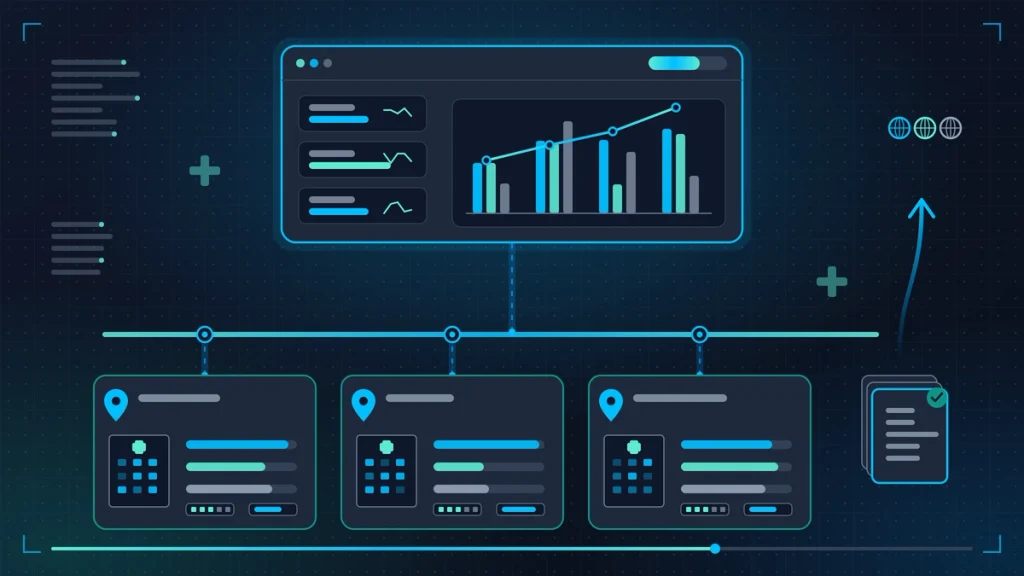
Healthcare investors in Morocco increasingly own several clinics, day centres or diagnostic sites. For them, enterprise-grade value optimization has an extra dimension: comparing sites on the same basis.
- One data model across sites. The same act, tariff and payer codes everywhere, so activity and revenue can be compared without manual reconciliation.
- Consolidated reporting. Activity, billing, collection and stock per site and for the group, in MAD, available every day rather than at quarter-end.
- Central control, local operation. Each site manages its own diary and stock; the group sees the totals and sets tariffs and payer rules once.
- Due diligence ready. When a new investor or lender asks for figures, they come from the system, with the records behind them, not from a spreadsheet prepared for the occasion.
- Language per user. Site staff work in Arabic or French; an international board reads the same figures in English.
For a group, the value of enterprise-grade value optimization is less in any single feature than in being able to trust the comparison between sites.
Interoperability with the tools you keep
A clinic system rarely replaces everything. Laboratories, imaging equipment, accounting software and the clinic’s existing website all have to coexist with it. We document which data flows where, and we prefer simple, robust exchanges, such as scheduled exports in the format your accountant expects, over fragile integrations that break with every update. Where a device or partner offers a documented interface, the system can read from it directly; where it does not, a controlled import is often safer than a hand-built connector.
How we put a clinic system in place
Clinics cannot stop to change their software. Our method, described on our how we work page, is designed around that constraint.
Observe a full day
We spend time at reception, with the billing office and with the store, and we follow the path of a patient from the first call to the final payment. We collect every register, spreadsheet and form in use.
Fix scope, date and price in writing
The proposal lists the modules, the screens, the reports, the delivery date and one fixed price. There is no hourly billing. If new needs appear during the build, they are quoted separately.
Import what exists
Patients, practitioners, tariffs, payers and stock are imported from existing files, cleaned and de-duplicated. Patient records are matched carefully, because a wrongly merged file is a clinical risk, not only an administrative one. Ambiguous cases are reviewed with the clinic.
Start with one flow
We usually start with appointments and billing, which deliver visible value quickly, then add stock, practitioner fees and dashboards. Each step runs in parallel with the old method for a short period before the switch.
Train each role where it works
Receptionists, practitioners, billing staff and storekeepers are trained on their own screens, in Arabic, French or English according to their preference.
A centralised system typically takes four to ten weeks from proposal to installation, depending on the number of modules and the state of existing records.
Enterprise-grade value optimization: what to ask any provider
Whether you work with us or with someone else, these questions separate a serious clinic system from a risky one.
- Who is the data controller, and what will the provider do, in writing, to support your CNDP filing?
- Where exactly will the data be hosted, and can you choose?
- Is every access to a patient file logged with the user and time?
- Can each role be limited to the data it needs?
- How are backups made, where are they stored, and when were they last restored?
- Can you export all your data at any time, in a usable format?
- Who supports the system after go-live, and how quickly do they respond?
Enterprise-grade value optimization is as much about these guarantees as about features.
What changes for each role
| Role | Before | After enterprise-grade value optimization |
|---|---|---|
| Reception | Several diaries, phone and WhatsApp | One diary, reminders sent automatically |
| Practitioner | Notes on paper, acts reported later | Acts recorded once, billing line created |
| Billing office | Reconstructs acts at month-end | Checks and sends claims, follows rejections |
| Store | Counts by hand, finds expiries too late | Batch and expiry tracked, alerts in advance |
| Director | Waits for monthly figures | Sees activity, billing and stock every day |
The change that staff notice first is usually the simplest: the end of searching for information that someone else already recorded somewhere else.
Common enterprise-grade value optimization mistakes
- Buying features before mapping the flow. A system with every module but no clear patient path recreates the same leaks in a new tool.
- Shared logins at reception. Convenient, and incompatible with any serious access log.
- Treating compliance as a document. A data protection policy that the software does not enforce protects nobody.
- Ignoring stock. Consumables are a large share of costs and a frequent source of unbilled value.
- No owner after go-live. Someone in the clinic must own user accounts, tariffs and payers, with support from the provider.
Questions about enterprise-grade value optimization in healthcare
What does enterprise-grade value optimization mean for a clinic?
It means capturing the full value of the clinic’s activity, with every act billed, every claim followed up and every item of stock tracked, while holding the system to enterprise standards: access by role, a complete access log, tested backups and data protection built into daily operation.
Can a custom system make our clinic compliant with Law 09-08?
No software makes a clinic compliant on its own. The clinic, as data controller, makes its filing with the CNDP and defines its purposes. The system supports those commitments with role-based access, access logs, minimisation, retention rules, exports for patient requests and secure hosting chosen by the clinic.
Where is patient data hosted?
Where the clinic decides: managed cloud servers, or a server installed in the clinic’s own premises in Morocco. Because transfers of personal data abroad are regulated under Law 09-08, many clinics prefer local hosting. Backups are encrypted and restores are tested.
How long does it take to put a clinic system in place?
A centralised system typically takes four to ten weeks from signed proposal to installation, at a fixed price agreed in writing. We usually start with appointments and billing, then add stock, practitioner fees and dashboards, running each step in parallel before switching.
Will reception and practitioners need long training?
No. Each role learns only its own screens, on site, in Arabic, French or English. Reception staff usually work confidently after a short session; practitioners need only the screens for recording acts and viewing their patients.
Next step
Enterprise-grade value optimization is not a large-hospital privilege. If your clinic’s activity, billing and stock live in several tools that do not agree, enterprise-grade value optimization starts with one conversation and one day of observation, both free. Tell us how your clinic works today, or read about our custom ERP builds and our technical management service.
Written by Abdelmalek MESKIK, CEO | Founder & Chief Operating Officer (COO), MeskikCode.